
Retrofit with a Sense of Proportion
When the industrial sector discusses sustainability, the conversation often centers on new technologies or entirely new systems. Yet there is often enormous potential already present in existing facilities. This is precisely where retrofit comes in: Existing systems are modernized, technically optimized, and made more energy-efficient—in a way that conserves resources and is usually significantly less expensive than purchasing new equipment. For Venjakob Maschinenbau in Rheda-Wiedenbrück, this is business as usual.
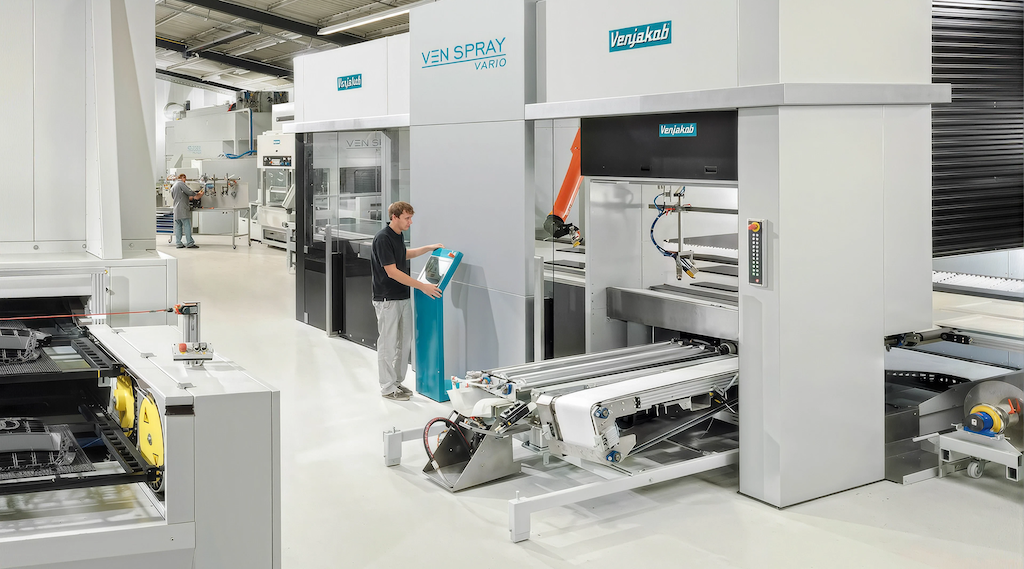
This topic is becoming increasingly important, particularly in industrial finishing technology. Painting and coating systems are among the most energy-intensive processes in industry. Dry coating technology, air distribution, and exhaust air purification, in particular, result in high energy consumption. Large volumes of air must be heated, moved, filtered, and exhausted. At the same time, energy costs and regulatory requirements are on the rise.
“The issues and motivations that bring customers to us vary,” reports Sören Steegmann, Head of Service and Sales at Venjakob Maschinenbau. “Technical adjustments for more cost-effective production are just as much a part of this as modernizations or retrofits aimed at saving energy.”
The advantage over a new system: production downtime usually remains manageable, and the investment costs are significantly lower. “Whether I invest between 100,000 and 600,000 euros or two million for a new plant—that’s a big difference,” says Steegmann. Retrofit projects often pay for themselves within three to five years.
Heat Recovery Saves Energy
A recent example is the retrofitting of heat exchangers on an existing drying line. The customer’s goal was to reduce energy costs and meet sustainability requirements.
The challenge: In drying processes, warm exhaust air is continuously extracted, while at the same time cold fresh air from outside must be reheated. This results in significant energy losses, especially in winter.
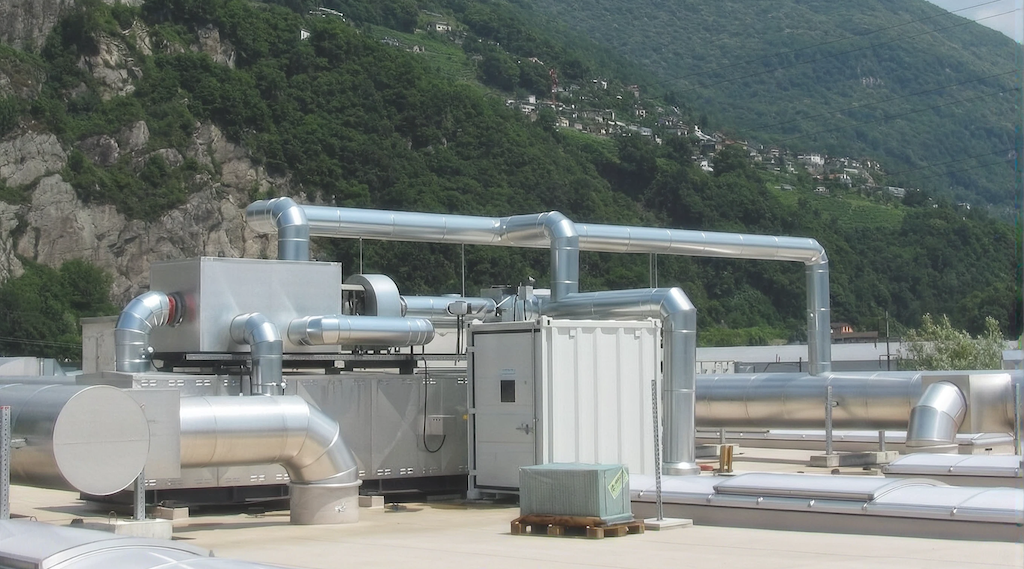
The solution was to harness the energy from the existing exhaust air. Heat exchangers installed on the roof return a portion of the thermal energy back into the process. Venjakob fully integrated the technology into the existing plant control system, including sensors, visualization, and process monitoring.
“Then you no longer have to heat the air from 20 to 60 degrees; instead, you get preheated air back,” explains Steegmann. Initial analyses show potential savings of around 30 percent. Notably, production was able to continue during the retrofit with only a few hours of interruption.
Retrofitting with UV Technology
At Venjakob, however, retrofit means not only energy savings but also adapting to new production requirements.
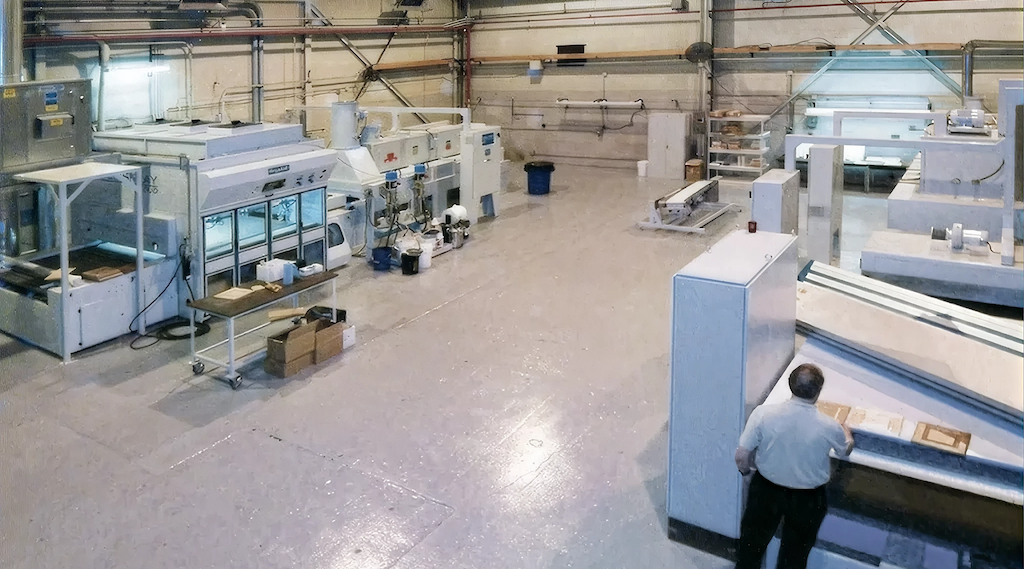
For example, an existing system at one customer’s site was upgraded with a UV drying module to enable the future use of UV coatings. In another project, UV technology was already in place, but it was operated by a robot that was reaching its capacity limits in terms of throughput. The result: reduced production speeds and quality issues.
The solution was a standardized UV module that was integrated directly into the existing drying system. “This required about a week of downtime. Afterward, we worked closely with the customer to monitor production and ensure that quality met standards afterward,” reports Steegmann.
Less overspray, lower consumption
There is also significant potential for optimization in spray technology. With the “Kante Plus” system, Venjakob has developed a retrofit solution for better finishing results in the wood and furniture industries.
Additional spray guns, more precise sensors, and expanded software parameters enable precise control right up to the edge of the workpiece. This reduces overspray—that is, the coat that previously was sprayed beyond the edge.
This saves material, reduces cleaning effort, and improves process stability.
Small Changes with a Big Impact
Not every retrofit project is so clearly visible. Often, benefits result from targeted, detailed optimizations.
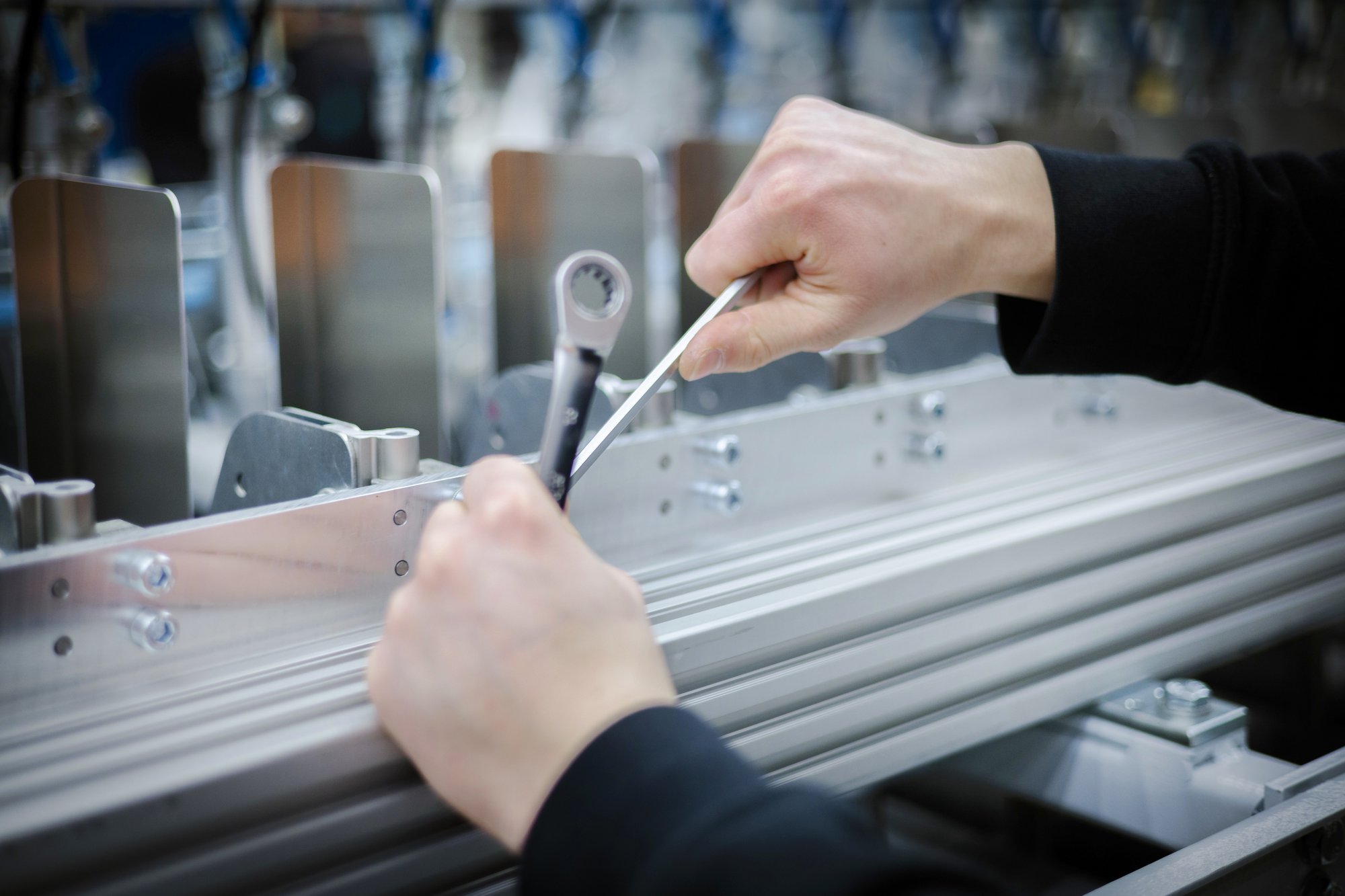
For example, Venjakob replaces wear-prone friction wheels in older high-temperature dryers with more durable claw couplings that were developed only recently. This improves process stability and reduces maintenance requirements.
Another example is retrofitting flow meters directly onto individual spray guns. Clogs or material deviations are detected early on, before scrap is produced or production batches need to be reworked.
Where Retrofits Reach Their Limits
Despite all its advantages, retrofit isn’t always the best solution. Limitations arise especially when production concepts undergo fundamental changes or significantly higher output is required—something that can no longer be achieved with much older coating lines.
“If the conveyor is designed for a specific speed, there’s only so much you can get out of it,” explains Steegmann. A retrofit can quickly become complex, especially with older systems.
For Venjakob, therefore, retrofitting is not an end in itself, but a strategic middle ground between continued operation and new investment—modernizing where it makes sense and rethinking where it becomes necessary.
We'd be happy to advise you
We develop solutions that optimize processes and improve results—reliably, efficiently, and tailored to your facility. We would be happy to consult with you personally about customized retrofit solutions.

Sören Steegmann
Service management sales
Telephone: + 49 5242 9603-287E-mail: ed.bokajnev@nnamgeets.nereos


