

With plasma activation, Venjakob offers an excellent surface modification that optimizes the surface for excellent adhesion of the coating. But what exactly is plasma activation? What does it do? How is it carried out and what needs to be taken into account? In general, it can be said that plasma activation changes the surface of a product to be coated in a way that offers the coating better adhesion. Plasma removes particles that contaminate the material to be coated - especially the finest impurities. Specifically, this requires the supply of energy, which causes a change in the aggregate states from solid to liquid and gaseous to plasma-like - i.e. plasma-activated. This creates a surface tension with polar charged molecules to which coating materials can dock and adhere better. Ergo: the finest cleaning and excellent coating preparation - that is plasma activation. But right from the start.
Surface modification with ionized gas
Plasma activation with ionized gas ensures particularly efficient surface modification of plastics, metals or composite materials, for example. Plasma activation modifies the surface energy precisely and selectively exactly where it is required. Cleaning processes can also be carried out with oxygen plasma - for example, if adhesives are subsequently to be applied to the surface. Oxygen can also be combined with other gases - this is recommended for etching surfaces, for example. In general, plasma activation results in significantly better wettability of the surfaces. This is an optimal prerequisite for the subsequent coating of workpieces and materials. Among the surface pretreatment processes, plasma is only one of the activation processes alongside flame treatment and flame silicatization.
Atmospheric pressure plasma - known as AD plasma for short
Atmospheric plasma can be generated under normal pressure. The advantage is that you do not need a low-pressure chamber. A special nozzle technology introduces the potential-free plasma directly into the production process under normal pressure conditions. The results are comparable with low-pressure plasma. The process is used industrially in the cleaning and activation of metals and plastics. The integration of the process into existing production lines is relatively straightforward in terms of costs - also due to the absence of a low-pressure chamber. It is particularly suitable for applying coatings to metals to protect against corrosion and improve adhesion. And this is usually done without solvents. The process is therefore also environmentally friendly. It can be used for plasma cleaning of continuous metals profiles, pipes before coating, painting or further treatment with adhesives. The process is also robot-compatible.
Corona treatment with DBD plasma
The surfaces of many plastics - for example polypropylene - are usually water-repellent and electrically well insulated. Wetting with paints, varnishes and other coating materials such as adhesives or bonding agents is therefore very problematic. What helps here is the so-called silent electrical discharge with DBD plasma. DBD stands for Dielectric Barrier Discharge. Treating the material surfaces with a dielectric barrier discharge plasma increases their surface energy and therefore also the adhesion forces of the surface. These adhesion forces increase the attraction between the molecules of the treated interface layers. Put simply, this increase significantly improves wettability. It is precisely thanks to this effect that activation by means of corona treatment is used industrially in the production and finishing of materials. In fact, it is one of the most common processes.
Low pressure plasma
Low-pressure plasmas are used in various technical applications - for example in the manufacture of microelectronic components and in the finishing of surfaces. Another field of application is coating technology. Venjakob also uses this plasma treatment process. When generating low-pressure plasma, the pressure is considerably lower than the earth's atmospheric pressure. They are operated in the pressure range of just a few pascals and are classified as non-thermal plasmas. The treatment of components takes place in a special treatment chamber, the low-pressure chamber.
The advantages of Venjakob plasma systems
We could now say that the advantages of a Venjakob plasma system are flexibility, flexibility, flexibility. 1.firstly, because a Venjakob plasma system can be easily integrated into existing systems and production lines thanks to its modular design - be it throughfeed systems, robot systems or spindle chain systems. And secondly, because they are also available as a stand-alone solution if you wish. And thirdly, because we always offer you a customized solution - tailored to your production techniques, system technologies and requirements. But flexibility alone is not enough: the real advantages are, of course, in the area of first-class quality:
- Ultra-fine cleaning: The finest impurities, the finest deposits, barely visible or even invisible soiling don't stand a chance - simply activate the plasma and the surface is cleaned - thoroughly. In other words: plasma can be used in various ways to carry out ultra-fine cleaning. Another method is the use of plasma-vacuum technologies, i.e. the low-pressure process, which has the advantage that it can be used to clean much larger surfaces. Increased wettability: Plasma treatment ensures that the material and molecules are open for optimum wetting. They are ready for industrial finishing and coating of all treated materials.
- Optimized adhesion: Plasma treatment significantly improves the adhesion of paints. The reason for this is that the plasma modifies the surface during treatment. The surface of the object treated with plasma becomes smooth due to the increase in surface energy. This in turn leads to improved adhesion and bonding properties of the paint. Increased wettability: Plasma treatment ensures that the material and molecules are open for optimum wetting. They are ready for industrial finishing and coating of all treated materials.
As a stand-alone or as part of the line - in each case completely individual.
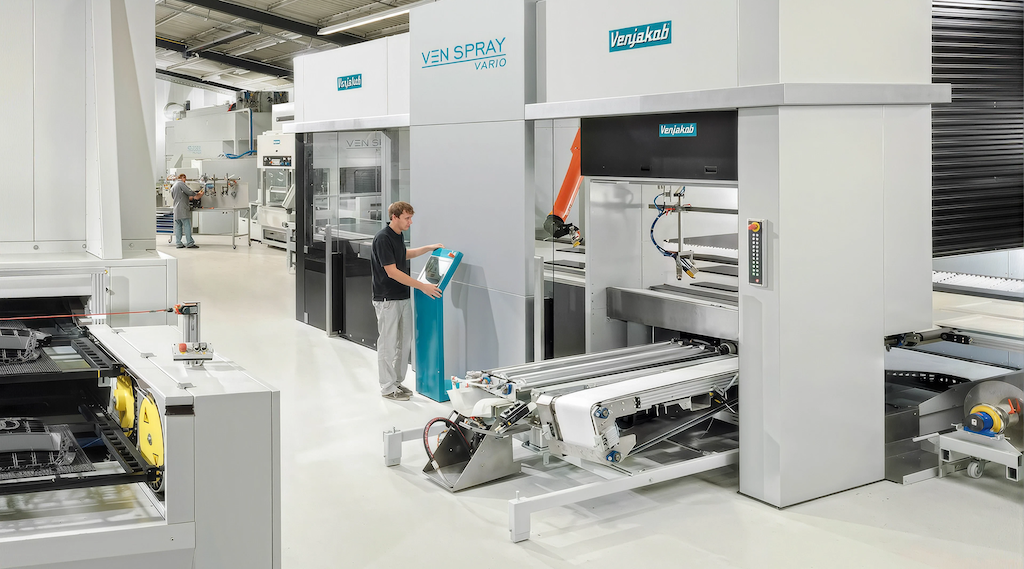
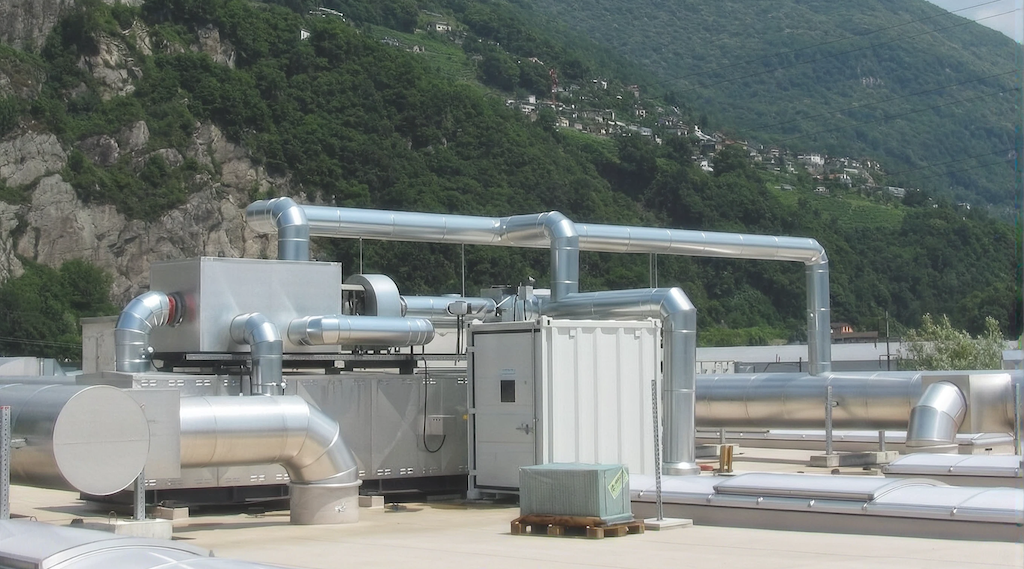
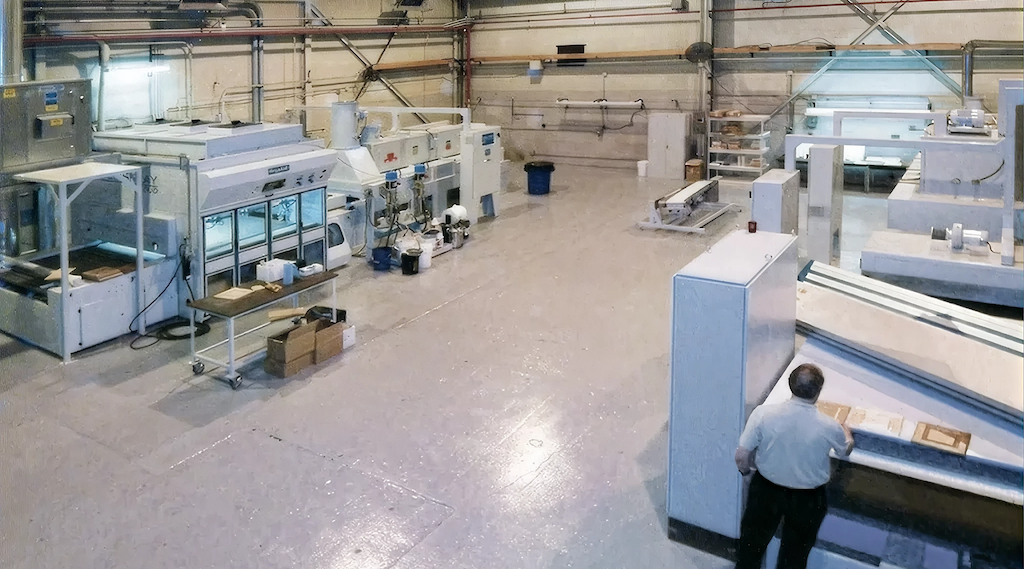
We have already mentioned it, but a word about it is certainly helpful: Your Venjakob plasma system is also available as a stand-alone solution. Integrated into the feeding system, the required pre-treatment, which also includes plasma activation, followed by the actual coating systemitself, as well as the drying systems and exhaust air purification , Venjakob offers you a complete solution across the board. All components are perfectly coordinated - from input to output. Including feeding, the required pre-treatment, which also includes plasma activation, followed by the actual coating system itself as well as the drying systems and exhaust air purification, Venjakob offers you a complete solution right down the line. All components are perfectly coordinated - from the infeed to the continuous chain conveyor system or throughfeed system to the output. All aspects of possible process optimization are included in the design. Whether it's the control of parameters or throughput speed, self-cleaning steel belts or easy cleaning of the paint booth.
Let's talk - about plasma activation and your Venjakob system
To summarize, plasma activation is a technique that optimizes and cleans surfaces. Many people also refer to this as plasma treatment or plasma cleaning. It is usually used to treat various materials such as plastics, metals or organic substances. Put simply, during plasma activation, an ionized gas, the plasma, generates a strong electric field that affects the surface of the material to be treated. Plasma activation increases the surface energy of the material, making it easier for various chemical compounds to dock onto the surface. Three methods can be used - treatment with atmospheric pressure plasma (also known as AD plasma), with DBD plasma (known as corona treatment) and finally the low-pressure plasma method, in which the plasma is generated in a specially designed low-pressure chamber. Plasma activation is integrated into the surface pretreatment phase, which is followed by the actual coating - for example, spray painting. At Venjakob, we are also happy to offer you plasma activation as an individual solution if required. In general, however, we always recommend the complete solution including coating, pre-treatment, coating, drying, exhaust air purification and removal. All of our individually developed solutions for customers are tailored to the quantities to be produced, the optimum use of coating materials and, of course, the use of energy. A further advantage is process optimization, which enables you and your specialist personnel to operate and clean the system easily or even carry out occasional maintenance. If the worst comes to the worst, we are at your side not only before the job is carried out, but also afterwards.
One thing is even more important than plasma activation. Trust.
We have already told you a lot about plasma activation. What we have spared ourselves - and you - are technical details about wetting optimization, physical formulas that describe in general terms what always results in individual solutions in specific applications. What is more important for you to know is the following: We at Venjakob have been developing and implementing coating systems for six decades. How many of them are equipped with plasma activation can be answered quite specifically: a great many. We have tested the process - and continue to test it - on an ongoing basis in our technical center. What we want to say with this: Your trust is more important than any formula. We cordially invite you to visit us in Rheda-Wiedenbrück to see for yourself. Get in touch with us. We won't find just any solution for you - we'll find yours.
We are happy to advise you
We develop solutions that optimize processes and improve results - reliably, efficiently and precisely tailored to your system. We will be happy to advise you personally on individual solutions in the field of plasma activation.

Gert große Deters
Business Unit Manager for General Industry & Automotive
Telephone: +49 5242 9603-184E-mail: ed.bokajnev@sretedessorg.treg


