
Environmentally friendly spray painting with significantly less solvent
For door edges with a wide variety of shapes, the paint is not applied using rollers, but by spray painting. In industrial lacquering, a lot of lacquer is lost, soils the door leaf surface and has to be laboriously washed off with solvent. JELD-WEN, the most important supplier of interior doors, set out with Venjakob to find a more environmentally friendly solution that would also save costs. The result: 15 to 20 tons less cleaning thinner per year.
JELD-WEN Door Solutions is part of the American JELD-WEN Group, the world's largest supplier of doors and windows. A wide range of doors and door frames are manufactured at the two German production sites in Mittweida and Oettingen as well as the sales location in Hamburg using state-of-the-art technology and a good 900 highly motivated employees.
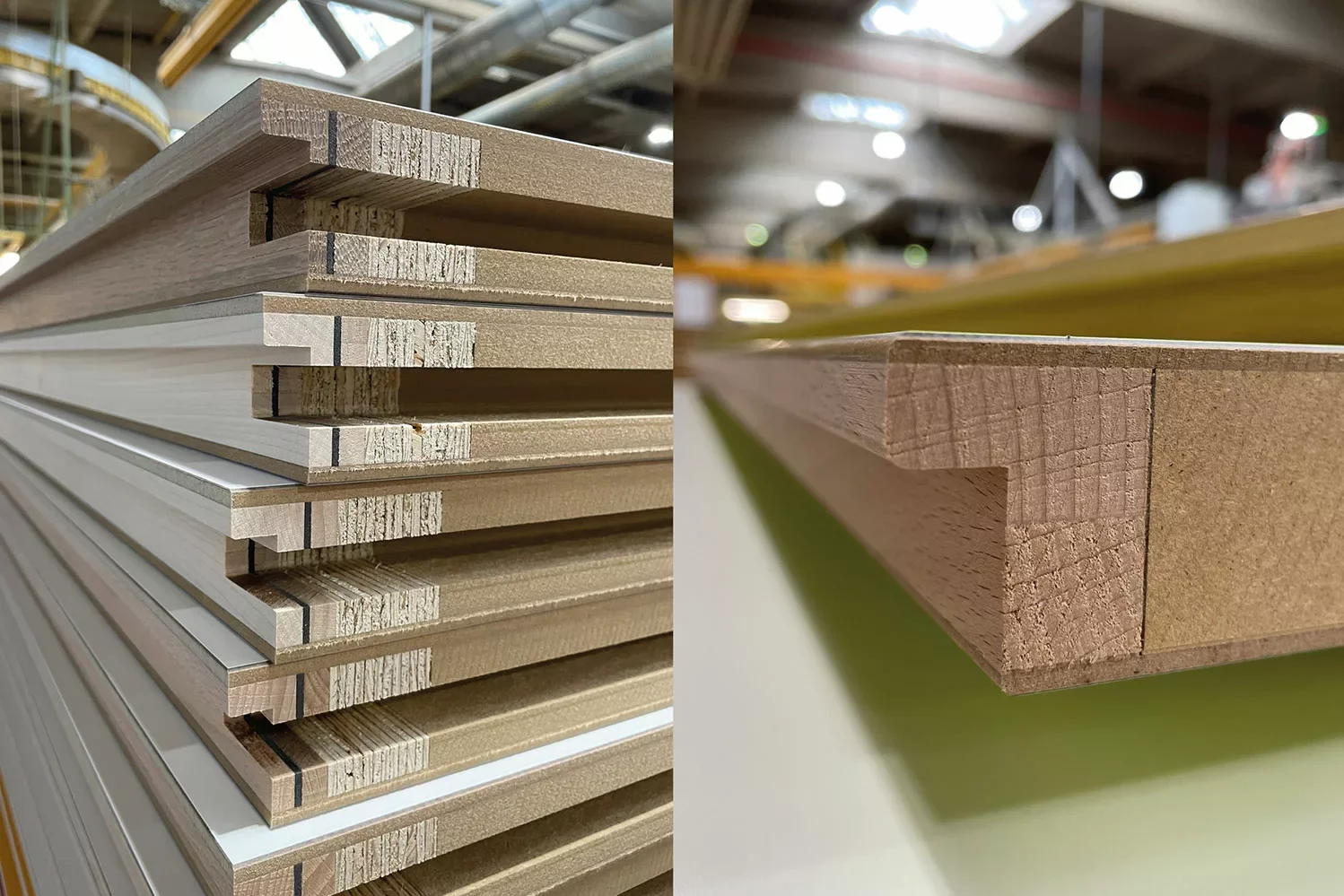
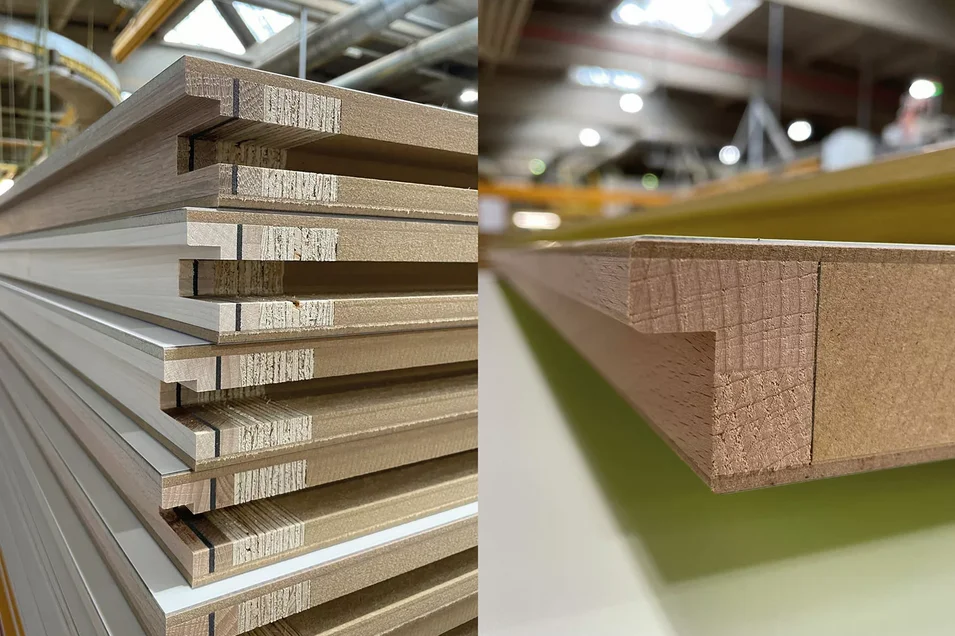
The existing edgebanding machines at the Oettingen plant were to be replaced by a new, environmentally friendly and cost-saving option. Single or double rebate, nursery or standard edge - the production of individual functional doors with a seemingly infinite range of variations presents the door manufacturer with challenges from time to time. Especially when it comes to improvements in terms of more environmentally friendly production. In contrast to the trade, where the door leaf surfaces are masked before the edges are spray coated, industrial spray coating involves accepting the fact that the paint may also be spilt. "Previously, the door leaves soiled by the paint were washed off. To ensure that this happens quickly enough, very active solvents are used, which ultimately end up highly diluted in the exhaust air," says Markus Uhl, Head of the Surface Department in Oettingen, describing the initial situation.
Environmentally friendly solution sought
Initially, a solution was sought to filter the solvents out of the exhaust air. However, the concentration of solvents in the exhaust air was too low to use an exhaust air purification system. "We would have had to use a gas-powered burner, which would have caused hundreds of kilograms of additional carbon dioxide. This made the use of Incineration systems nonsensical," explains plant manager Wolfgang Oswald. In the end, they turned to the East Westphalian mechanical engineering company Venjakob. "We didn't want to give up so quickly, so we looked for an exchange with specialists in surface treatment that we knew and trusted. With Venjakob, we succeeded in developing a prototype from an idea and a precise, automatic, CNC-controlled edge spraying system. The door leaves remain clean thanks to a protective stencilling system and the subsequent cleaning process is no longer necessary, which, in addition to the new water-based edge coating, saves the most solvent," explains project manager Stefan Randi from JELD-WEN. The two edgebanding machines that were previously in use were replaced with the new system. The now superfluous washing units could be dismantled.
Stencilling in the tenths tolerance range
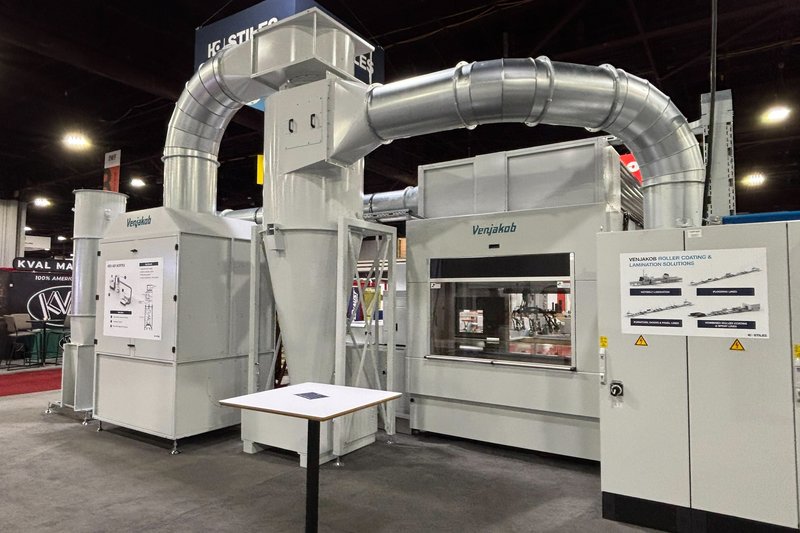
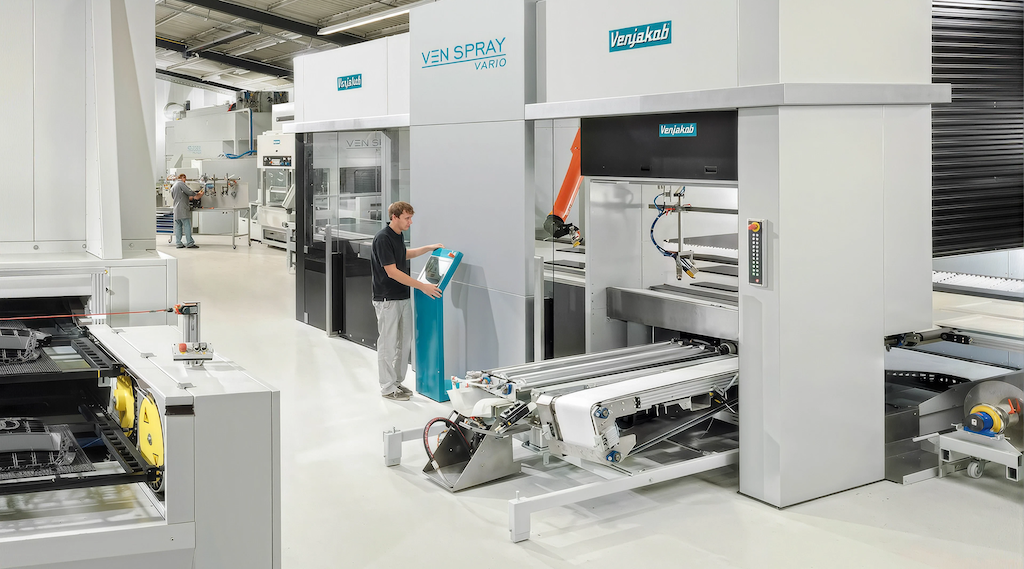
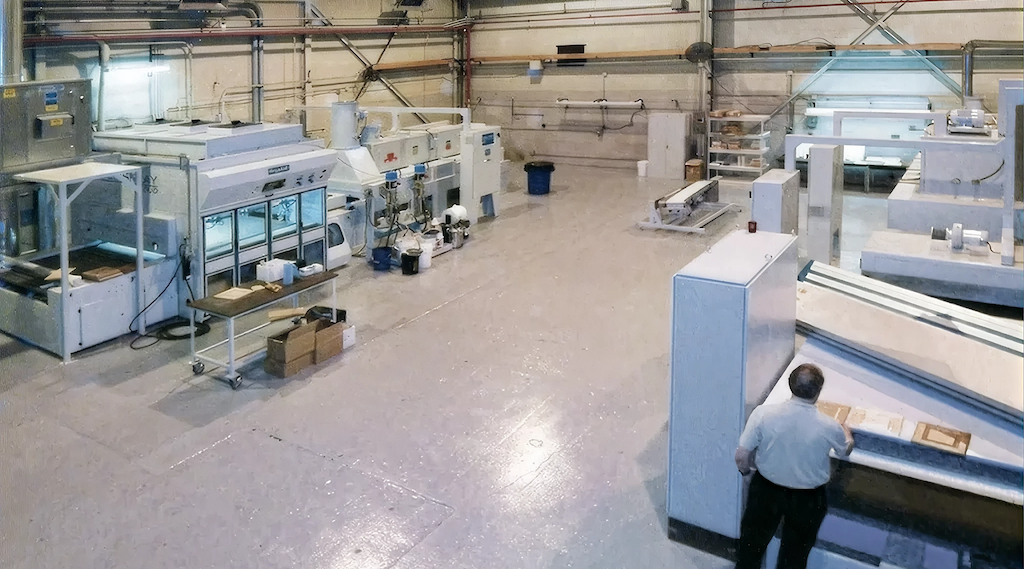
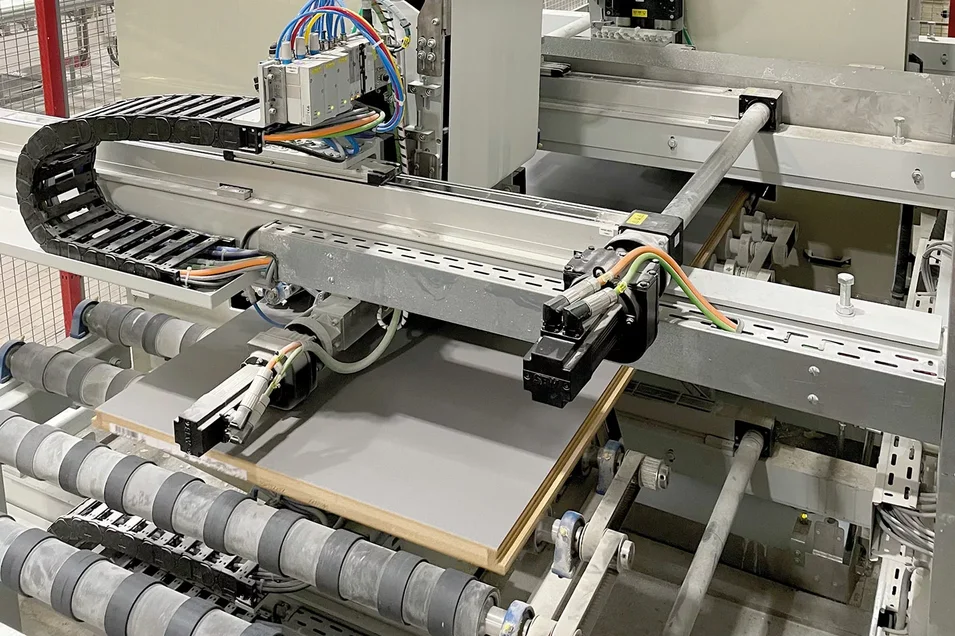
The edge spray coating system has a modular design and coats the various edges on both sides in a continuous process. The longitudinal edge profiles can be sharp-edged or, as with the nursery edge, have a radius to the door surface. The system consists of a spray coating system, a stencilling system and an extraction system. It was integrated into the existing overall painting line as a self-sufficient system. To paint different edge profiles and door thicknesses, the doors are detected at the infeed, identified and the corresponding recipe is called up fully automatically from the control system. Directly at the infeed of the edge spray painting booth, there is an additional workpiece detection system that measures the door precisely and ensures the correct distance to the next door. The dimensions are used for fine adjustment - this is how the height of the stencilling system is set and protects the units from damage caused by incorrectly fed workpieces. "The stencilling system is set to the workpiece with a high degree of accuracy, as minor deviations often occur during door production, e.g. in thickness or shape. We work in the tenths of a tolerance range here for template setting. That's pretty precise," says Oliver Milde, customer advisor at Venjakob.
New water-based lacquer tested in advance
The Hesse lacquer system requested by the customer for lacquering the longitudinal door edges was tested in advance in the Venjakob technical center in test series and the result was approved by the customer. The water-based lacquer is applied in two passes, whereby the application quantities are varied to suit the respective type of wood depending on the program. After the first coating pass, the workpieces are dried and sanded in between. This is followed by another lacquering pass and then final drying.
The challenge of drafting contracts
As the Oettinger door manufacturer is part of an American group, this has a corresponding impact on the drafting of the contract. A contract had to be developed that took into account both Anglo-Saxon and European law. "This is a major challenge for everyone involved. Such a contract is far more extensive and our customers are grateful if we can support them here," says Oliver Milde. Venjakob has already prepared itself for future challenges in contract law and has built up the necessary legal expertise. "If you consider that the technical definition and contract drafting took up the same amount of time within this project, you get an idea of where the journey will take us in the future. We assume that this service will soon be in even greater demand," emphasizes Oliver Milde.